Android's Linux Terminal App Now Works on a Snapdragon Phone, Starting With the REDMAGIC 12 Pro
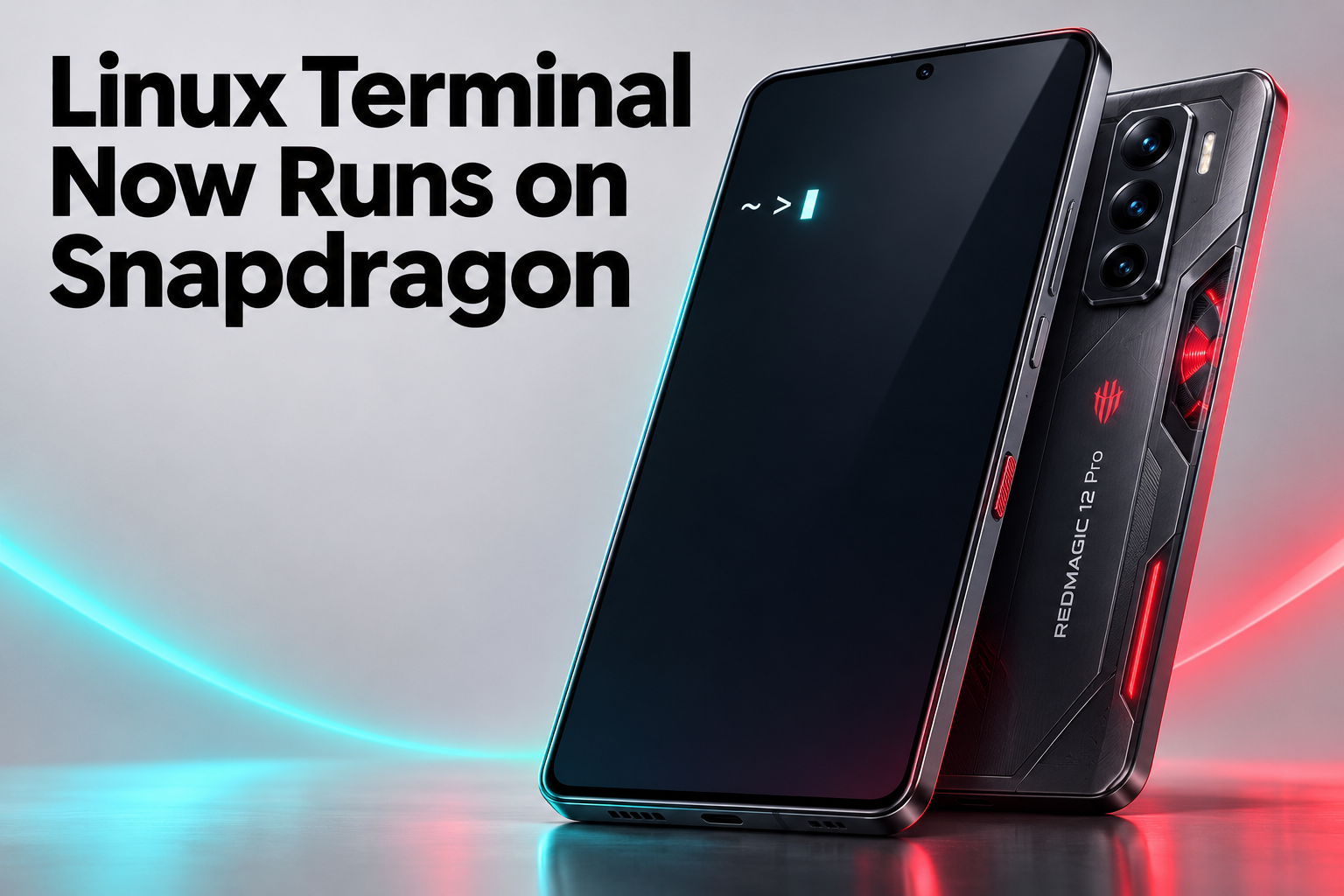
Google's Linux Terminal app for Android now runs on a phone with a Qualcomm Snapdragon chip, something that hadn't happened before. The phone is the REDMAGIC 12 Pro, which is powered by a Snapdragon 8 Elite Extreme Gen 6, and 9to5Google confirmed that the app works on it. Until now the Terminal had not been available on any hardware running Snapdragon chips, so if you've wanted Linux on a non-Pixel phone with a Qualcomm processor, this is the first real data point.
The news also comes with a hint about what's next. Tipster Dylan H pointed Android Authority to a Google security announcement from the previous month that mentioned Snapdragon support. Below, we'll go through what the app is, what makes it possible, and which parts of the story are still unconfirmed.
What the Android Linux Terminal app is and where it has worked so far
Google first introduced the Linux Terminal app on Pixel phones, which run the company's own Tensor chips. Since then it has spread to devices from other manufacturers, so it is no longer a Pixel-only feature. The one big gap was Qualcomm: no phone with a Snapdragon chip had been able to run it.
The app depends on two things. A device has to support the Android Virtualization Framework, usually shortened to AVF, and it also has to offer compatible virtual machines (VMs). If either piece is missing, the Terminal has nothing to run on. That's why support tends to follow the chip and the platform underneath, not just a software update to the app itself.
REDMAGIC 12 Pro: the first Snapdragon phone confirmed to run it
The REDMAGIC 12 Pro is the device that broke the pattern. It's powered by a Snapdragon 8 Elite Extreme Gen 6, and 9to5Google confirmed that the Linux Terminal app works on it. That makes it the first Snapdragon phone we can point to with confirmed compatibility.
It's worth keeping the claim narrow. What's confirmed is this one phone with this one chip. Past Snapdragon chips weren't compatible with the Terminal app, and the confirmation doesn't automatically extend to every other phone that carries a Qualcomm processor.
Moving your data to a new phone
If you're thinking about switching to a new handset to try this out, the first chore is getting your stuff across. Smart Transfer is one app that handles that. Its Clone tool moves data between Android and iOS devices, phones and tablets included, over Wi-Fi. It can carry pictures, videos, contacts, messages, apps and more, so Data transfer to a new device doesn't mean starting from scratch, and an Sms Transfer is part of the same job.
For smaller jobs, the app has a Share section too. Share Nearby sends pictures, videos, music and files to people on the same Wi-Fi, and Share Remotely sends files across networks, including to other countries. So whether you want photos mobile transfer from an old phone, a contacts files share with someone else, or a fast share of a few documents, File Transfer is covered in one place. It also has storage cleanup and backup tools for contacts and bookmarks.
Why Snapdragon support took so long: Android Virtualization Framework and pKVM
The source doesn't spell out why Snapdragon phones were left out for so long, so we won't guess at reasons. What it does show is the technical foundation. The Terminal needs AVF and compatible VMs, and the protected KVM hypervisor, known as pKVM, is the kind of layer that makes this work on supported hardware.
There's a useful comparison on the laptop side. Googlebook laptops running Snapdragon X Elite chips had access to the Linux Terminal through the same sort of pKVM hypervisor. So Qualcomm silicon wasn't entirely absent from this picture. It was the phone side, specifically, where no Snapdragon device had been able to run the app.
What Google's security announcement says about Snapdragon and other chipmakers
Google's security announcement says Qualcomm's Snapdragon chipsets will also support its architecture via AVF as it expands across the broader silicon ecosystem. That's the line Dylan H flagged for Android Authority. It's a forward-looking statement, though, and it comes with no timeline, so it tells you where things are heading, not when they'll arrive.
The same announcement also mentions MediaTek. It said MediaTek announced support of the pKVM-backed On-device AI seal on the MediaTek Dimensity 9600 Pro. That isn't the same thing as the Linux Terminal, so don't read it as Terminal support for MediaTek phones. It does show Google working with more than one chipmaker on this virtualization groundwork.
Which other phones might get the Linux Terminal next, and what to do now
One more phone has been named: the HONOR Magic 9 Pro Max, which is on the way with these new chips. But it's only named as an upcoming device. Nothing confirms that it supports the Linux Terminal. The author of the original report also said it sounded possible that support could reach the Snapdragon 8 Elite Gen 6 as well as the Extreme version, but that's speculation, not a confirmation.
For you, the practical takeaway is simple. If you want Linux on your phone, don't buy on the assumption that a Snapdragon chip guarantees it. Look for confirmation on the exact model, ideally the kind 9to5Google gave for the REDMAGIC 12 Pro. If you already own a Pixel or another phone where the Terminal runs, nothing changes for you today.
If a Snapdragon phone is your next purchase for Linux tinkering, wait until your exact model has been confirmed before you commit.


Comments
Post a Comment